A Buyer’s Guide to Thousand Oaks Neighborhoods
July 9, 2026
July 9, 2026
Wondering how to make sense of Thousand Oaks when every area seems to offer a different mix of home style, lot size, and price point? If you are planning a move here, it helps to know that Thousand Oaks is not just one kind of market. You will get the most value from your search when you understand how the city’s housing types line up with your budget, lifestyle, and daily routine. Let’s dive in.
Thousand Oaks is, at its core, a mostly owner-occupied housing market with a strong single-family foundation. Census QuickFacts shows a 70.8% owner-occupied housing rate, and SCAG’s 2020 housing profile shows that 67.5% of homes are single-family detached, with smaller shares of attached homes, multifamily housing, and mobile homes.
That matters because your home search here will usually start with one big question: do you want a detached home, an attached home, or a larger-lot property near open space? The city’s planning framework is built around density and housing form, not simple buyer labels, so understanding those categories can make your search much clearer.
Another defining feature is the landscape itself. The city says roughly one-third of its land is designated open space, including 15,334 acres of protected open space and more than 150 miles of trails. In practical terms, that means neighborhood feel in Thousand Oaks is often shaped as much by terrain, views, and access routes as by subdivision name.
In Thousand Oaks, neighborhood type often tells you more than a label on a map. It can signal the likely home style, lot size, privacy level, and how close you may be to shopping, transit stops, or major routes.
It also helps explain pricing. Recent market snapshots show a citywide median sale price of about $1.1 million for all homes, with single-family homes at $1,254,362, townhouses at $750,147, and condo or co-op homes at $547,293. Those numbers are snapshots, not fixed tiers, but they offer a useful starting point as you compare your options.
This is the classic Thousand Oaks neighborhood type many buyers picture first. These areas align most closely with the city’s Neighborhood Low 1 and Low 2 land use categories, which are intended to maintain existing single-family neighborhoods and support infill at a similar scale.
For you as a buyer, this usually means detached homes in established residential settings. Some nearby Low Medium areas also include smaller-lot attached housing, but the overall feel remains suburban and home-focused.
This segment generally offers the standard detached-home experience in Thousand Oaks. Based on current market examples, detached homes in this category can fall roughly from the high $700,000s into the low $1 millions, with larger or more updated homes priced higher.
That wide range is helpful if you want options. You may find an entry point below the citywide single-family median, or you may decide to stretch for a larger home, a better lot, or more recent updates.
These neighborhoods tend to work well for buyers who want a familiar suburban layout and easy access to daily needs by car. The city bus system is designed around shopping centers, schools, hospitals, parks, and public facilities, but the city as a whole remains more suburban than highly walkable.
Redfin currently gives Thousand Oaks a Walk Score of 33, which it classifies as minimally walkable. That means many buyers end up evaluating these areas based on commute patterns, route access, and convenience to regular errands.
Some of Thousand Oaks’ larger planned communities are regulated through specific plans. The city’s current list includes areas such as Lang Ranch, Westlake North Ranch, Rancho Conejo, Dos Vientos, Civic Arts Plaza, TO Ranch, The Oaks, and Hillcrest.
These areas often align with Neighborhood Low Medium, Medium 1, and Medium 2 designations. Those categories can allow a broader mix of housing, including small-lot detached homes, townhomes, rowhouses, duplexes, and lower-scaled multifamily buildings.
This category can vary a lot in both style and price. Current neighborhood median snapshots show Newbury Park around $1,054,500, Lang Ranch around $1,124,622, and Dos Vientos around $1,774,403.
That range shows why planned areas should not be lumped into one bucket. Some may line up closely with the citywide detached-home median, while others can push well into the upper $1 millions depending on lot size, finishes, and overall setting.
These areas may appeal to you if you want a more intentionally planned environment and a housing mix that can include both detached and attached options. The city’s land use framework also points to some of these settings, along with Thousand Oaks Boulevard and village centers, as places where walkable daily goods and services are more strongly encouraged.
Transit can also be part of the equation in select corridors. The city’s 2026 transit changes added Route 45 serving the Newbury Park and Rancho Conejo corridor, which is a useful signpost if access to that area matters in your search.
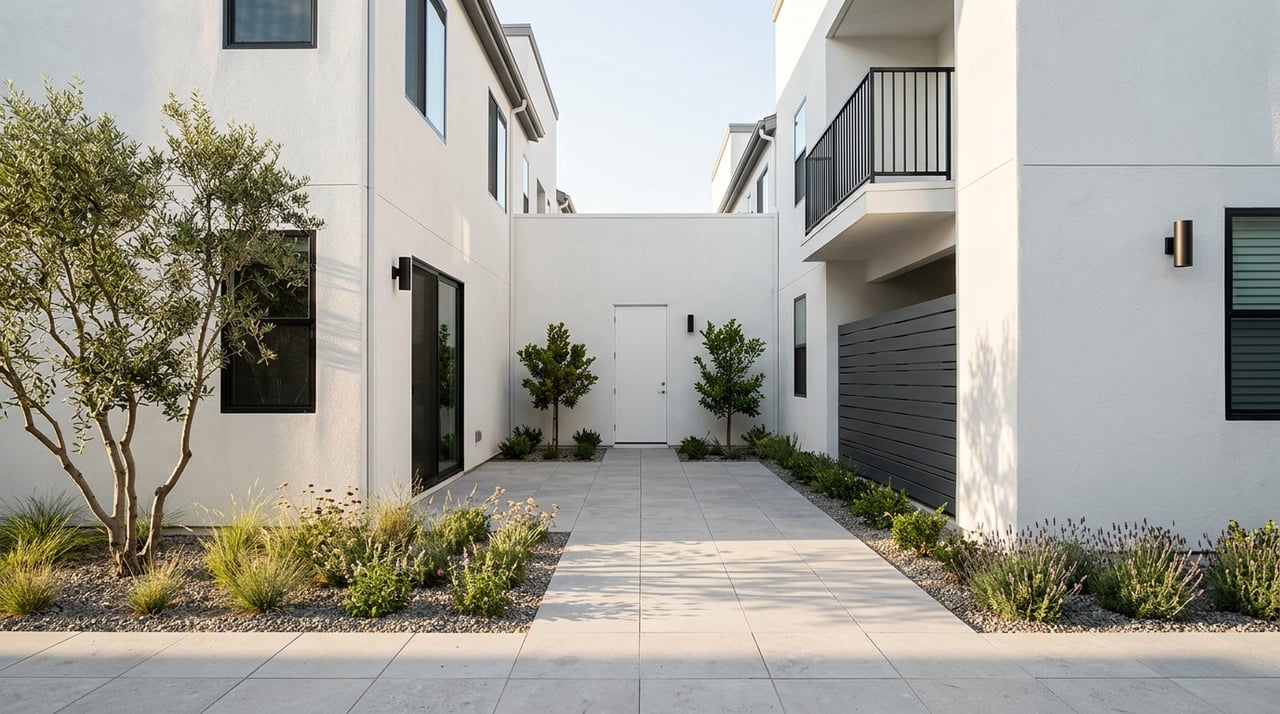
If you want a lower-maintenance option or a different price point, condo and townhome areas deserve a close look. These homes overlap with the city’s Low Medium, Medium 1, Medium 2, and High residential categories, which allow forms like row houses, townhomes, courtyard housing, walk-up apartments, and other multifamily housing.
The city says Neighborhood High is concentrated near Thousand Oaks Boulevard between Hillcrest Drive and Highway 101, east of SR 23. That area is intended for more walkable and transit-ready housing.
This is typically the more affordable side of the Thousand Oaks ownership market. Recent citywide pricing snapshots put condo or co-op median sale prices at $547,293 and townhouse median sale prices at $750,147.
Current listing examples also support that range, with condos showing around the mid-$500,000s and townhomes often in the mid-$700,000s, plus some higher-end attached homes above that. Downtown Thousand Oaks, with a median sale price around $749,000, can serve as a useful close-in comparison point for buyers considering attached housing.
This segment is often tied more closely to city amenities and service nodes. The transit system includes schedule locations such as The Oaks Mall, Civic Arts Plaza, Grant R. Brimhall Library, Newbury Park Branch Library, the Senior Center, and the City Transportation Center.
For some buyers, that creates a strong value proposition. If you want ownership in Thousand Oaks with less exterior upkeep and potentially better proximity to certain amenities, condos and townhomes can be an efficient place to focus.
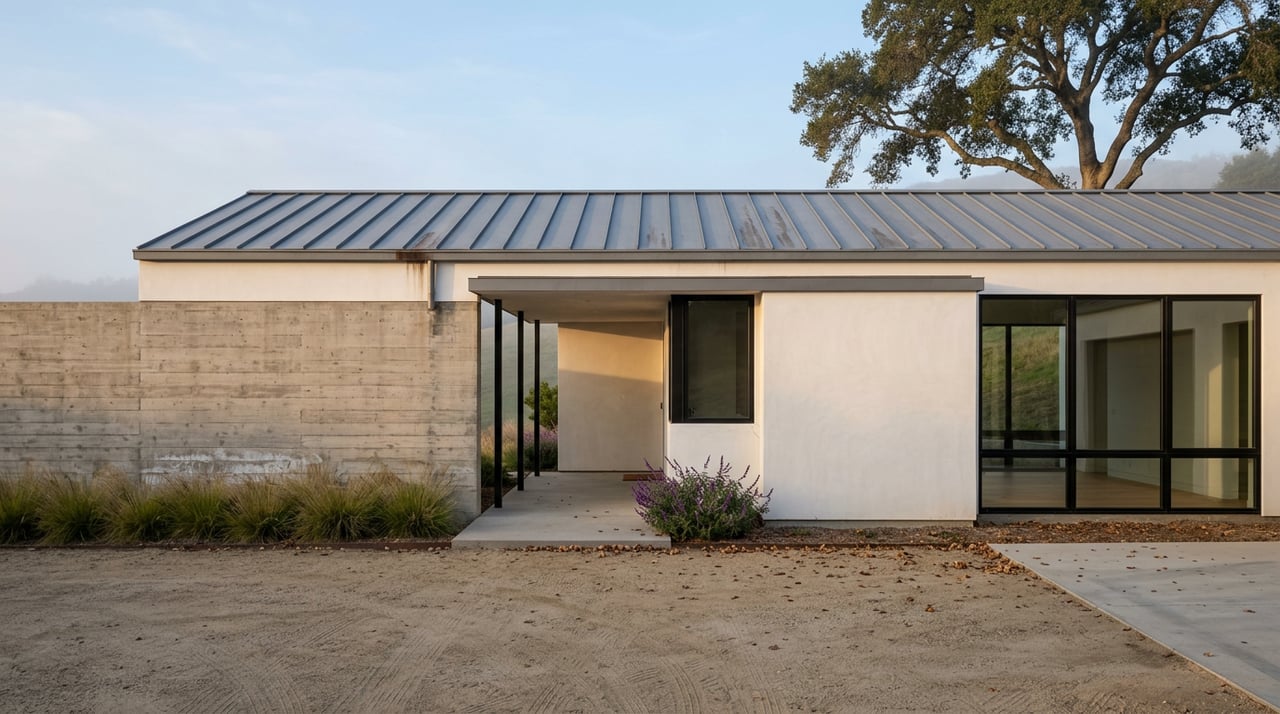
If your priorities include more space, more privacy, or a setting near open land, you may be drawn to Thousand Oaks’ large-lot and estate-style areas. The city’s closest official categories are Neighborhood Rural and Neighborhood Very Low.
The city describes Neighborhood Rural as very low-density housing at the edge of preserved open space. Neighborhood Very Low is described as existing and planned single-family development that preserves large-lot character in areas with topographic variation.
These areas often sit at the upper end of the market, but they are better understood by land pattern and setting than by a simple luxury label. You may see larger lots, hillside or view premiums, and a stronger sense of separation from more conventional tract neighborhoods.
Recent examples show how pricing can rise above the city median. Lynn Ranch’s recent median sale price was $1,598,462, with recent sold homes ranging from $1,285,000 to $2,450,000, while Dos Vientos posted a current median sale price of $1,774,403.
This category may fit you if privacy, lot size, and open-space adjacency matter more than being close to a denser activity hub. The city notes that its open spaces help define where development ends and natural land begins, which is a major part of the appeal in these settings.
For buyers, that often translates into a different daily feel. You may trade some convenience for more room, a more tucked-away setting, or a stronger connection to the landscape.
One of the easiest ways to narrow your search is to decide what housing form makes the most sense for your life right now. In Thousand Oaks, the biggest dividing lines are usually detached homes, attached homes, and large-lot properties.
If you want yard space and a traditional neighborhood setting, established suburban tracts may be your best first stop. If you want lower maintenance or a lower entry price, condo and townhome clusters may offer better alignment.
Price matters, but so does what you are getting for that price. A budget in the mid-$500,000s may point you toward condos, while a budget in the mid-$700,000s may begin to open townhomes and some detached-home opportunities.
Once you move into the low $1 millions and above, your options may expand across many single-family areas. If you are shopping in the upper tiers, large-lot and estate-style areas may enter the conversation depending on condition, location, and land value.
Because Thousand Oaks is minimally walkable overall, your daily routes matter. Commute patterns, freeway access, shopping runs, and how often you use city amenities can all shape which neighborhood type feels most practical.
That is why two homes with similar price tags can feel very different in real life. The better fit is often the one that supports your routine, not just the one with the most features on paper.
When buyers first start looking in Thousand Oaks, they often compare individual listings before they compare neighborhood types. A more useful approach is to group your search by the kind of environment you want, then compare homes within that category.
That can help you avoid common mistakes, like comparing a condo near amenity hubs to a large-lot property near open space as if they should deliver the same lifestyle. They serve different goals, and the best choice depends on what matters most to you.
A local strategy also matters because Thousand Oaks is shaped by planning categories, specific-plan areas, and the practical realities of driving routes and terrain. If you can define your preferred neighborhood type early, your home search usually becomes faster, clearer, and less stressful.
If you are weighing your options in Thousand Oaks, the right guidance can help you quickly separate what looks good online from what truly fits your goals. The team at The Arledge Group brings deep Conejo Valley experience and a hands-on approach to helping buyers navigate neighborhoods with clarity and confidence.
Stay up to date on the latest real estate trends.

Whether your plans to buy or sell your home are immediate, or in the future, we hope you will take our services seriously. We will show you why working with The Arledge Group and Compass will be the right experience for you. Excellence is expecting more than others think possible.
Get In Touch With Our Team To Learn More

The Arledge Group
[email protected]
(818) 519-4429
Denise Arledge | CA DRE# 01040071
2945 Townsgate Rd Ste 300 Westlake Village CA 91361