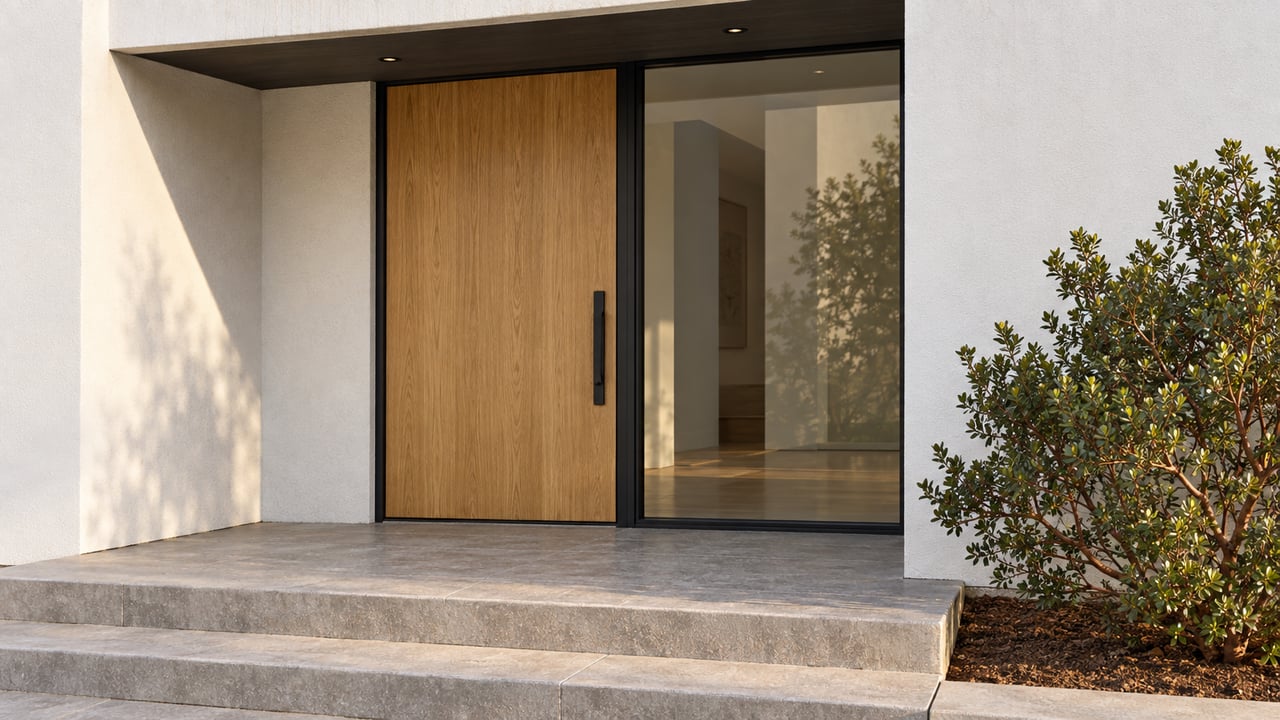
Thousand Oaks' Slow-Growth Cap Is Expiring. Why Won't That Add More Single-Family Homes?
October 8, 2026
October 8, 2026
Thousand Oaks' best-known growth limit, Measure E, is set to expire on November 5, 2026, according to California's Department of Housing and Community Development. Nothing on the November ballot replaces it. For anyone shopping for a detached home here, that sounds like the start of a building boom. It isn't. The decisions that control how many single-family homes Thousand Oaks will have were mostly made years ago. They sit in a land-use map adopted in 2023 and an urban boundary that runs through 2050, and both point new housing toward apartments on former commercial, office and public land.
Voters go to the polls on Tuesday, November 3, 2026. Measure E reaches its 30-year sunset two days later. Measure E is Ordinance 1280-NS, adopted November 5, 1996, and codified in Section 9-2.203 of the municipal code. HCD said in an August 15, 2024 letter that it understood the measure "is set to expire on November 5, 2026."
That letter also said "it does not appear an extension is proposed at this time." It asked the city to explain whether continuing to enforce a unit cap was consistent with the state's Housing Crisis Act. The letter was an inquiry and did not rule on anything. We found no public record of the city's response or of any later finding by HCD.
The ballot confirms the state's read. Ventura County's official list of 2026 local measures includes a Simi Valley hotel tax, several school bonds, a United Water Conservation District bond, an Oxnard sales tax renewal and a Las Virgenes Unified parcel tax. It lists no Thousand Oaks city measure.
People often describe Measure E as a limit on building. It was really a limit on changing the General Plan without a vote. When it passed in 1996, it set a citywide residential capacity of 81,124 units. After that, three kinds of land-use amendments needed approval from a majority of voters:
That vote requirement was at the center of the summer fight over the downtown project. On June 23, 2026, the City Council voted 5-0 to approve a mixed-use plan for the Civic Arts Plaza and the vacant property to its west. The plan calls for 240 homes, 39 of them designated low-income, along with a 142-room hotel and 28,000 square feet of retail. Some speakers asked why the project wasn't going to voters under Measure E. The city's position was that the project is exempt because it is needed to make viable use of publicly owned surplus land.
Citizens for Responsible Development in Thousand Oaks then started a referendum. The group gathered 7,128 signatures by the August 12 deadline. It asked a court for more time, and on September 10 it said it would drop the case because it could not afford legal counsel. The group also said it would keep pursuing other options.
This is the part of the story that matters most for single-family buyers. According to HCD, the city's 2018 land-use map update lowered the allowed density in several single-family neighborhoods by about 1,008 units. That freed up capacity under the cap, and the city used it mainly for a new mixed-use land-use designation.
The General Plan map adopted on December 5, 2023 went further. HCD says every unit under the 81,124 baseline has now been assigned to a site.
So under Measure E, the city didn't add homes. It moved them around. Capacity left established detached neighborhoods and went to areas planned for mixed use. When the measure expires, the vote requirement goes away, but the map stays. Adding capacity anywhere will still take a separate land-use action by the city. Expiration by itself approves no homes and rezones no streets.
Measure E was one of several growth limits. The City Urban Restriction Boundary, or CURB, ties the edge of urban development to the city's sphere of influence as it existed on January 1, 1998. In November 2016, voters passed Measure W, renewing it through December 31, 2050 with 76% of the vote.
Outside that line, the city generally cannot approve urban uses or extend urban services such as community sewers. Residential density is limited to one primary home per 10 acres. A separate Parks Initiative protects land designated as existing parks, golf courses and open space through the same 2050 date.
At a September 2026 candidate forum, Councilmember Mikey Taylor put a number on it:
"Something that makes Thousand Oaks very unique is that almost half of our city is protected open space, about 42%. The only question that we have to answer is, 'Where is this housing going?'"
The state's housing target for Thousand Oaks this cycle is about 2,600 units. As of a March 10, 2026 report to the council, the city had approved 687 units since 2021. City staff said another roughly 1,600 units had entitlements and were in the pipeline. The named projects show where that housing is landing:
| Project | Former use of the site | Homes | Status in reporting |
|---|---|---|---|
| Downtown Civic Arts Plaza plan | Civic Arts Plaza and vacant westside property | 240, with 39 low-income | Approved June 23, 2026 |
| 195 E. Hillcrest Drive | Two-building office complex | 297 apartments, with 25 deed-restricted affordable | Approved by Planning Commission, July 2026 |
| Oakwell, 2150 Hillcrest Drive | Former City Hall site, later part of Amgen's campus | 333 apartments | Approved 2023 |
| T.O. Ranch | Former Kmart | 420, with 50 lower-income | Approved June 2022 |
| The Sanctuary, Newbury Road | Former Timber School | Luxury apartments | Under construction as of October 2025 |
| Mountain View Estates by Toll Brothers | Not specified | 10 detached homes | Sales expected to open early 2027 |
Only one recently announced project in the table is detached housing. Toll Brothers' Mountain View Estates will have 10 lots with two-story homes of more than 3,600 square feet, five bedrooms and 5.5 baths, plus optional detached casitas. Ten new homes barely move the supply of detached houses in a city this size.
The candidates largely agree on the direction. At the forum, they said they support steering growth to planned areas such as Thousand Oaks Boulevard, as the General Plan lays out. Taylor said he wants more housing along the 101 corridor and the boulevard to protect established neighborhoods and open space. District 3 candidate Victor Hayek summed it up as "stick to the plan."
If you are buying a detached home in Thousand Oaks or Newbury Park, you are competing for houses that already exist. Measure E's expiration doesn't change that. Detached homes come up for sale when owners decide to sell, not when builders open new tracts.
The market numbers that are available don't break this out. The Ventura County Star reported that the countywide median for existing single-family homes was $925,000 in August 2026. That was down 2.6% from July and 1.3% from a year earlier, and sales fell 12% year over year. Those are county figures. We found no public Thousand Oaks-only data for July 2026 or later. Whatever prices do from month to month, the city's planning documents say most new homes will be apartments.
Where you buy within the city matters more for a different reason. Change is concentrated in a few places. Downtown at the Civic Arts Plaza could break ground on its first phase as early as mid-2027, with the last phase finished as early as 2034. Three of the projects above are on or near Hillcrest Drive, and The Sanctuary is on Newbury Road. Homes near Thousand Oaks Boulevard and the 101 are likely to see more construction, new neighbors in apartments, and new shops and restaurants within walking distance over the next decade. Homes in established single-family neighborhoods are tied to a map that already lowered their density in 2018.
Both can be good choices. They are different purchases, and the planning record lets you see the difference before you write an offer.
Does Measure E's expiration reopen the downtown vote? No. The referendum was a separate effort aimed at the council's June ordinance. Its sponsors ended their court challenge in September but said they would pursue other options.
Could my single-family street be rezoned once Measure E is gone? Any change in residential capacity would still require a General Plan amendment by the city. The current map allocated every unit in 2023, and the CURB boundary stays in place through 2050.
Is Mountain View Estates an option for 2026 buyers? Not yet. Toll Brothers says sales are expected to open in early 2027, and there are 10 home sites.
If you own a detached home near the boulevard or in a settled neighborhood and want to know how this planning record affects your home's value, The Arledge Group can walk you through the projects closest to your street and what they mean for pricing. Request your home valuation and we'll go over the details with you.
Stay up to date on the latest real estate trends.

Whether your plans to buy or sell your home are immediate, or in the future, we hope you will take our services seriously. We will show you why working with The Arledge Group and Compass will be the right experience for you. Excellence is expecting more than others think possible.
Get In Touch With Our Team To Learn More
The Arledge Group
[email protected]
(818) 519-4429
Denise Arledge | CA DRE# 01040071
2945 Townsgate Rd Ste 300 Westlake Village CA 91361