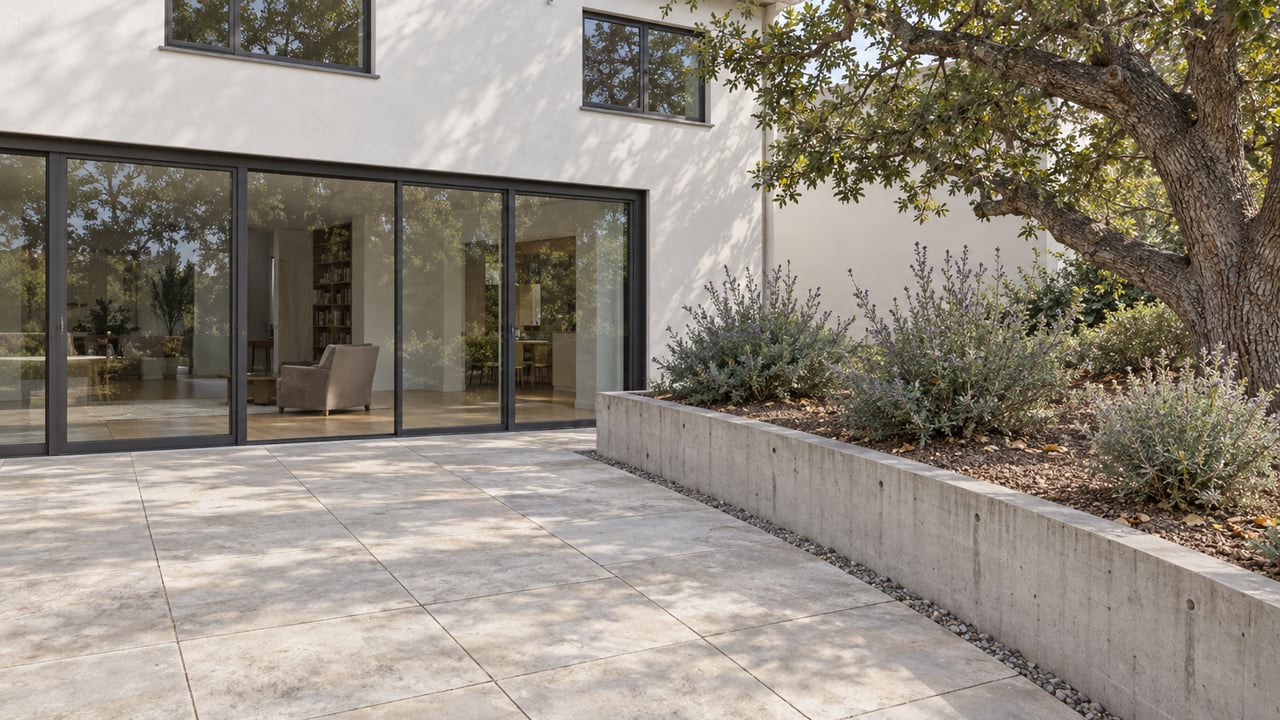
Why Two Calabasas Homes at the Same Price Can Have Very Different Water Bills
October 22, 2026
October 22, 2026
Can a seller's water bill tell a buyer what their own bill will be? In Calabasas, it usually can't. The Las Virgenes Municipal Water District, which serves the city along with Agoura Hills, Hidden Hills and Westlake Village, builds each customer's tiers around that customer's household. The buyer's first step after closing is a new service application.
Three inputs set the water price, and all three stay off the listing: how many people live there, how much irrigated area the district has measured, and which pumping zone the home sits in. Two homes at the same price can carry very different monthly costs for that reason, and the gap shows up on the first bill after closing.
LVMWD's residential application for service has to be submitted at least one business day before service begins. The first bill carries a $170 service-initiation charge. The form asks how many residents live at the property for at least three consecutive months a year, with a minimum of one. It also explains that the water budget depends on residents, irrigated landscape and evapotranspiration during each billing period.
So the household count on the new account is the buyer's. The district's published materials don't say whether the irrigated-area figure carries over automatically from the seller's account. Each of those inputs moves a different part of the bill, and they reinforce one another.
The district's water budget page describes three inputs.
Water that falls within the budget is billed at the lowest price, and water beyond it moves up the tiers. For 2026, the residential commodity rates per billing unit of 748 gallons are $4.56 for Tier 1 Efficient, $7.68 for Tier 2 Inefficient and $9.05 for Tier 3 Excessive. The district's public pages don't list the exact usage cutoffs between tiers, because each account's cutoffs come from its own budget.
That design means the price of a gallon depends on the household and the yard as much as on the gallon. A large lot with a pool and mature irrigated landscaping gets a larger outdoor budget than a compact lot. If the aerial estimate misses part of a newly landscaped yard, or still counts a lawn that has been removed, the tiers drift away from how the property is actually used. The water budget adjustment request form lists a changed resident count and a changed landscape area among the reasons to file. It asks for a drawing or sketch with total square footage, counting pool and spa surface but excluding the house and hardscape. The district reviews each request, and adjustments take effect when received.
The resident count looks like a lever that only makes water cheaper. More people means a bigger indoor budget, so more of each month's water is billed at the Tier 1 price. The same count also sets the sewer charge. LVMWD bills sanitation by household size, and the district's water budget page reminds customers that sanitation charges rise with each added resident.
| Household size | 2026 monthly residential sanitation charge |
|---|---|
| 1 person | $30.59 |
| 2 people | $51.52 |
| 3 people | $72.46 |
| 4 people | $93.39 |
| 5 people | $114.32 |
| 6 or more | $135.25 |
Each step in that 2026 schedule adds about $20.93 a month. On the water side, one added resident moves about 1.9 HCF from the Tier 2 price to the Tier 1 price, a difference of $3.12 per unit. That works out to roughly $5.93 a month. These figures are arithmetic on the published rates, not an LVMWD sample bill, but the gap is wide. An accurate count matters for the honest reason the district gives: the indoor budget is meant to match the household that actually lives in the home.
The third input is the one most likely to separate two homes with similar households and similar yards. LVMWD adds an elevation charge to every unit of potable water, based on the highest point the water is pumped to before it reaches the home.
Combined with the tiers, those surcharges change what "efficient" water costs:
| 2026 price per unit | Zone 1 | Zone 2 | Zone 3 | Zone 4 |
|---|---|---|---|---|
| Tier 1 Efficient | $4.56 | $4.98 | $7.95 | $8.02 |
| Tier 2 Inefficient | $7.68 | $8.10 | $11.07 | $11.14 |
| Tier 3 Excessive | $9.05 | $9.47 | $12.44 | $12.51 |
A Zone 3 household that stays within its budget pays $7.95 a unit. A Zone 1 household that has gone over its budget pays $7.68. On a hillside lot, staying efficient still leaves the per-unit price above what a lower-elevation neighbor pays after overshooting.
The district says most of its customers are in Zones 1 and 2. Its 2025 rate study shows the split by consumption. In the study's updated estimate of annual potable consumption, 5,699,434 HCF based on an updated efficiency standard, about 55.1% falls in Zone 1, 37.9% in Zone 2, 5.8% in Zone 3 and 1.2% in Zone 4. Those shares measure water used, not the number of homes. Zones 3 and 4 are a small slice of the district, so a buyer comparing homes can easily hold one of each without realizing it.
The zone is tied to the water system's pumping, not to a street name or a neighborhood boundary. The district links a billing zone map from its rates page, and the elevation charge appears as its own line on a bill. A seller's recent statement is the most direct way to see which zone applies to a specific house.
The readiness-to-serve charge is the flat monthly fee, set by meter size. For the standard ¾-inch household meter it was $43.61 as of January 1, 2025, and it rose to $58.79 on January 1, 2026. That is an increase of about 35% in the fixed charge alone, not in the whole bill. Larger meters cost more. In 2026 a 1-inch meter is $91.88 a month and a 1½-inch meter is $174.60. Meter size matters most on larger estate properties, and a buyer won't find it in the listing details.
Next year's numbers are already on the schedule. The five-year plan approved in 2025 through the Prop 218 process sets the following, effective January 1, 2027:
The district's rates page says the Board must reaffirm each following year's adjustment annually, so these 2027 figures remain scheduled until that happens. The rate study also left potential Metropolitan Water District pass-through costs starting January 1, 2027 out of its proposed potable rates. The rate study page lists the forces behind the plan: imported water costs, capital repairs and replacements, regulatory requirements and the Pure Water Project, which the district expects to supply up to 30% of drinking water needs. The Acorn previewed the Pure Water construction site in its July 31, 2026 edition.
When the study was still provisional in 2025, The Acorn reported a sample three-person household using 17,000 gallons. That household paid $232 at the efficient rate that year and was projected to pay $295 for the same use five years later. That example came from an earlier four-category rate design, before the three-tier structure took effect in 2026. It shows the direction of costs, not any particular home's figure.
Read together, these inputs give a buyer a short list of things to check on a recent statement:
A seller's total is a record of their household on that elevation, with that meter. A buyer can rebuild their own likely cost from those parts.
Does a buyer take over the seller's LVMWD account? The district's application describes a new service application and a $170 initiation charge. It allows a transfer from two spouses to one, while a change to a family member takes a new application and the $170 fee. It does not describe a procedure for a home sale.
Does a pool count in the water budget? Yes. LVMWD includes pools when it calculates outdoor budgets, and the adjustment form asks for pool and spa surface area.
Can a homeowner change the elevation zone? Nothing in the district's materials describes changing it. The zone comes from how high water has to be pumped to reach the home.
Water rates and service rules can change, and this post is general information, not legal or financial advice. Please confirm the details for a specific property with LVMWD and the right professionals.
Comparing Calabasas homes where the monthly running costs differ more than the list prices do? The Arledge Group can help you go through a seller's utility records alongside the comps before you write an offer. If you're selling, we can help you put those records together so buyers have answers early. Request your home valuation to start the conversation.
Stay up to date on the latest real estate trends.

Whether your plans to buy or sell your home are immediate, or in the future, we hope you will take our services seriously. We will show you why working with The Arledge Group and Compass will be the right experience for you. Excellence is expecting more than others think possible.
Get In Touch With Our Team To Learn More

The Arledge Group
[email protected]
(818) 519-4429
Denise Arledge | CA DRE# 01040071
2945 Townsgate Rd Ste 300 Westlake Village CA 91361