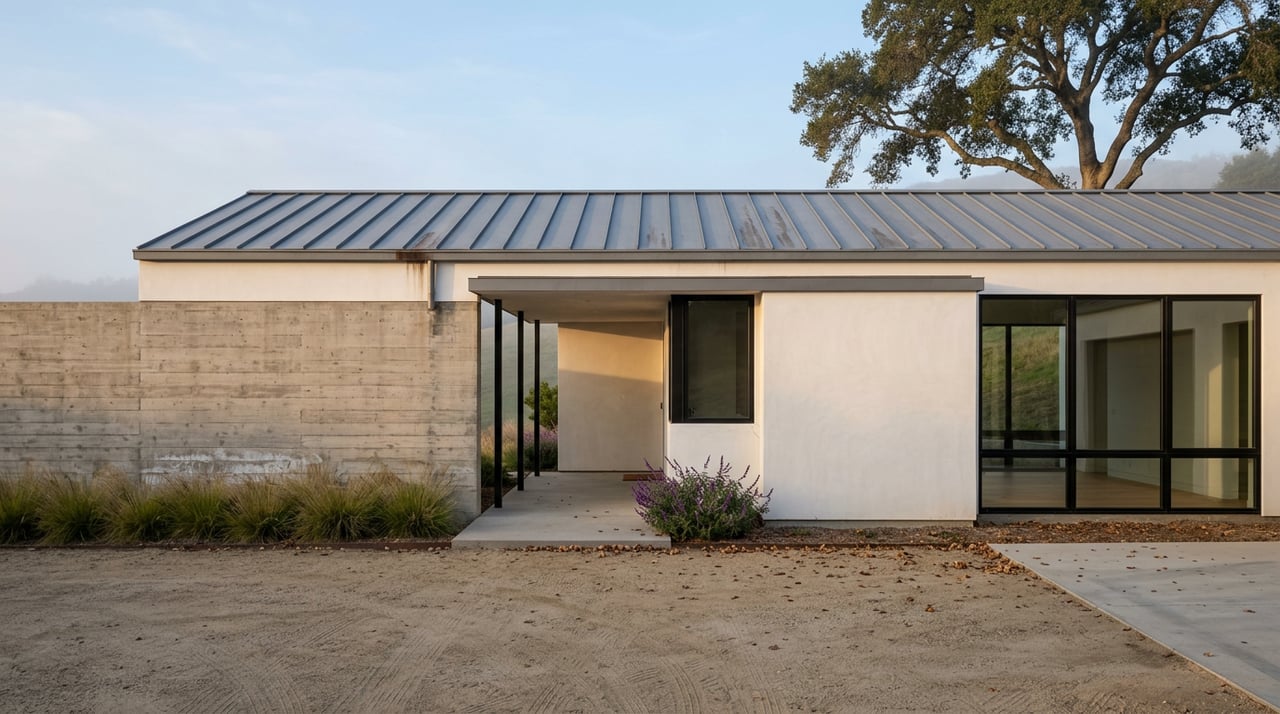
Selling a Home in Old Agoura: Septic and Equestrian Zoning
August 20, 2026
August 20, 2026
An agent who has only sold tract homes in Agoura Hills walks into an Old Agoura listing appointment expecting the usual paperwork: CC&Rs, a reserve study, board meeting minutes, maybe a pending litigation disclosure. They ask the seller for the HOA packet. The seller says there isn't one. That single exchange tells you almost everything about why escrows in this neighborhood run on a different set of documents than escrows five minutes away in Morrison Ranch or Lake Lindero.
Old Agoura is the large-lot, equestrian-zoned enclave inside the city of Agoura Hills, the neighborhood where horse trailers share the street with dog walkers and where several properties still handle their own wastewater instead of connecting to a municipal line. The city's General Plan identifies Old Agoura as the portion of town not fully served by sewer, which is a planning detail with real consequences at the closing table. If you're preparing to list or buy here, the due diligence checklist that works everywhere else in the Conejo Valley will leave gaps. Here's what actually fills them.
In a standard common-interest development, California's Davis-Stirling Act requires the seller to hand over a defined bundle before close: budgets, reserves, insurance certificates, governing documents, any pending assessments or litigation. It's a known quantity. Escrow officers process it in their sleep.
Old Agoura doesn't have that bundle. The neighborhood is represented by Old Agoura Homeowners, a registered nonprofit that collects voluntary contributions rather than mandatory dues. The group exists to protect the area's rural character and has taken on real fights over the years to do it, and it does not maintain reserve funds. There's no CC&R packet to request here.
That absence isn't a paperwork shortcut. It means the questions a Davis-Stirling disclosure would normally answer, about water, about land use restrictions, about who maintains what, have to be answered a different way, through permit records and site-specific documentation instead of an association's files.
West Coast Sanitation says California requires a septic system inspection before a property with an onsite system transfers ownership. West Coast Sanitation describes Los Angeles County's certification process for septic inspections, commonly referred to by the C-42 designation. A qualified provider locates the tank, runs a flow test,
That's the easy part. The harder part is that Los Angeles County's Onsite Wastewater Treatment Program reviews systems within unincorporated areas of the county and in cities that have signed onto the county's Local Area Management Program. Agoura Hills is an incorporated city, which means a buyer's team needs to confirm which agency actually holds jurisdiction over a given parcel's system before assuming the inspection path is identical to a rural unincorporated property. Skipping that confirmation is how a straightforward septic pump-and-inspect turns into a permit-history scavenger hunt three weeks before closing.
Sellers who get ahead of this, by pulling septic permit records and scheduling the inspection before the home ever hits the market, remove one of the few variables in an Old Agoura transaction that can genuinely stall escrow. Buyers who wait to ask about it until after their offer is accepted are negotiating from a weaker position than they realize.
The zoning that makes Old Agoura desirable to horse owners is the same zoning that constrains what a new owner can do with the land, and the equestrian overlay sets standards.
Manure management, including storage and disposal, matters because runoff into nearby streams or storm drains is a concern in the Santa Monica Mountains watershed, not a theoretical one. If a property has an HOA, the CC&Rs would normally spell out expectations here. In Old Agoura, that guidance sits with the county and with whatever informal norms the immediate neighbors have established, which is exactly the kind of detail a seller should document rather than leave to conversation.
Trail and bridle-path access adds another layer. Old Agoura sits beside some of the most used equestrian trail systems in the Santa Monica Mountains, with Old Agoura Park itself functioning as a practical horse-trailer staging point.
| Due diligence item | Standard Agoura Hills HOA tract | Old Agoura |
|---|---|---|
| Governing documents | CC&Rs, bylaws, board minutes provided by the HOA | No mandatory HOA; Old Agoura Homeowners collects voluntary dues only |
| Water and sewer | Municipal sewer connection assumed | Some parcels remain on septic; confirm system and jurisdiction |
| Land use limits | HOA architectural review and use restrictions | City equestrian overlay sets standards |
| Shared costs | HOA dues fund reserves and common maintenance | No mandatory dues; no reserve fund to inherit or evaluate |
| Access and easements | Typically standardized within the tract | Trail and bridle-path easements should be confirmed individually |
The table isn't a warning that Old Agoura is harder to transact in. It's a map of where the diligence actually lives. Once an agent or buyer knows to look at permit records and zoning overlays instead of a board packet, the process moves at a normal pace.
Does every Old Agoura property have a septic system? No. Some parcels connect to sewer and others don't. The city's General Plan identifies Old Agoura generally as the area not fully served by sewer, but system type has to be confirmed parcel by parcel rather than assumed for the neighborhood as a whole.
Is Old Agoura Homeowners a mandatory HOA? No. It's a registered nonprofit that asks for voluntary contributions to fund insurance, communication, and occasional legal advocacy on behalf of the neighborhood. It doesn't levy mandatory dues or maintain a reserve fund the way a Davis-Stirling association does.
Who handles septic inspection approval, the city or the county? Los Angeles County's Onsite Wastewater Treatment Program reviews systems in unincorporated county areas and in cities that have signed onto the county's Local Area Management Program. Because Agoura Hills is incorporated, confirm which agency has jurisdiction over a specific parcel before assuming the standard county process applies without modification.
Old Agoura rewards buyers and sellers who know where to look, and it penalizes the ones who bring a tract-home checklist to a working horse property. If you're weighing a sale in Old Agoura or anywhere else in the Conejo Valley and want a team that already knows which documents actually matter here, reach out to The Arledge Group to request your home valuation.
This article is general information, not legal, tax or financial advice. Consult a qualified professional about your situation.
Stay up to date on the latest real estate trends.

Whether your plans to buy or sell your home are immediate, or in the future, we hope you will take our services seriously. We will show you why working with The Arledge Group and Compass will be the right experience for you. Excellence is expecting more than others think possible.
Get In Touch With Our Team To Learn More

The Arledge Group
[email protected]
(818) 519-4429
Denise Arledge | CA DRE# 01040071
2945 Townsgate Rd Ste 300 Westlake Village CA 91361