
Selling in Thousand Oaks: The Oak Tree Rule That Can Set Your Listing Date
September 10, 2026
September 10, 2026
A few years ago, a national coffee chain wanted to build a wooden patio deck around a mature oak at one of its Thousand Oaks locations. Before a single post could go into the ground, the project needed a certified arborist on site for every day of construction, a pre-meeting with the city's oak tree specialist to walk through what could and couldn't be touched, and a final report certifying that no root larger than two inches had been cut. The crew found five spots where roots exceeded that threshold. They relocated the piling instead of cutting through, and the job took three days longer than planned.
That's not an edge case. That's how Thousand Oaks treats any construction near a protected oak, commercial or residential, and it's the detail most sellers preparing a home for market never see coming until their contractor calls with a delay.
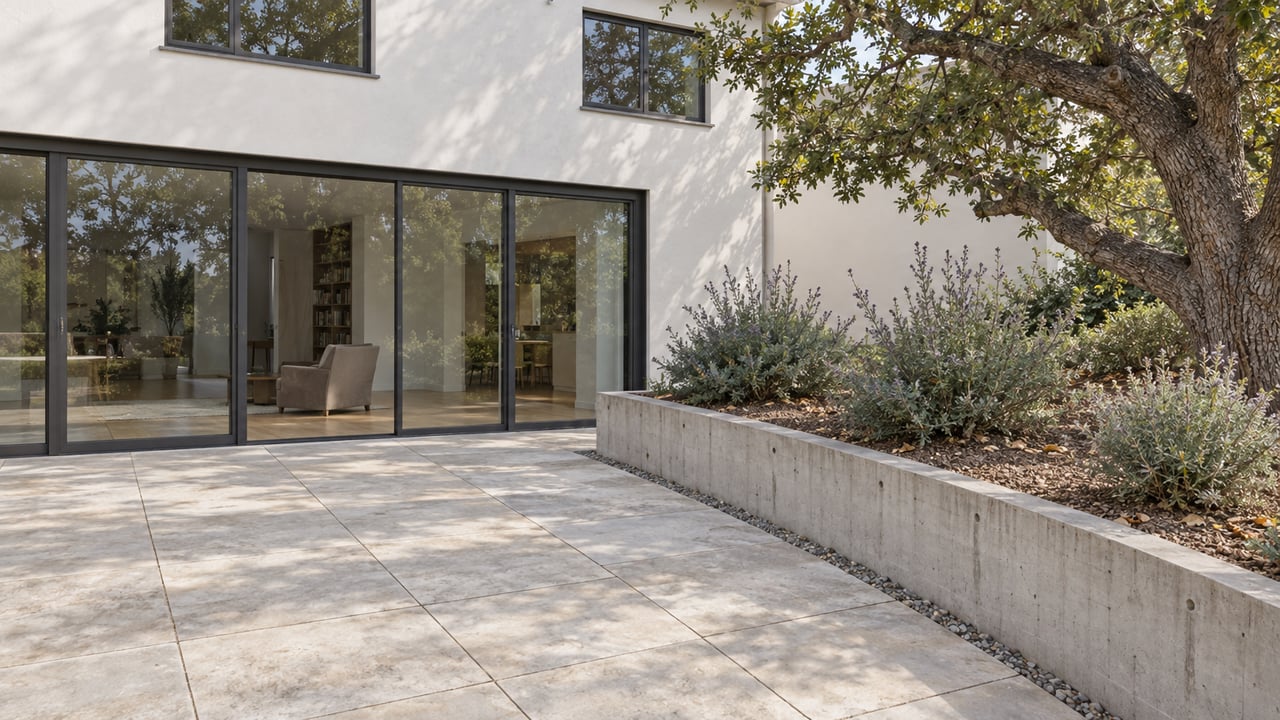
If you're planning a pool, a patio, or a room addition before you list, you probably measured the project against the tree's canopy. That's the wrong measurement. Thousand Oaks defines a tree's protected zone as five feet beyond the outer edge of the canopy or 15 feet from the trunk, whichever is greater. For an oak with a modest canopy but a wide trunk, that second number wins, and it pushes the protected radius well past where most homeowners assume their project is clear.
This matters most for sellers doing exactly the kind of pre-listing work a Compass Concierge project might fund: a backyard refresh, a pool for better listing photos, a patio expansion to show off outdoor living space. Grading, trenching, and new foundations near a tree's root zone all count as encroachment under city code, whether or not the tree itself is touched. A project that looks like it has nothing to do with the oak in the corner of the yard can still trigger a full permit review because of where the roots run underground.
Thousand Oaks actually runs two separate tree protections, and confusing them is where a lot of sellers get tripped up. The Landmark Tree ordinance protects specific species, sycamore, black walnut, bay laurel and toyon, above certain diameter thresholds. That ordinance carries a carve-out: it doesn't apply to single-family properties under two acres, which covers the overwhelming majority of homes in the Conejo Valley.
The Oak Tree ordinance has no such carve-out. It protects any species of Quercus over two inches in diameter, on any residential lot, regardless of size. A homeowner who read about the Landmark Tree exemption and assumed it covers all protected trees on their property is working from the wrong rule.
| Oak Tree Ordinance | Landmark Tree Ordinance | |
|---|---|---|
| Species covered | All Quercus (oak) species | Sycamore, black walnut, bay laurel, toyon |
| Size threshold | Over 2 inches in diameter | Varies by species (roughly 8-12 inches) |
| Acreage exemption | None | Does not apply to single-family lots under 2 acres |
| Protected zone | 5 ft beyond canopy or 15 ft from trunk, whichever is greater | Same standard applies |
If your lot has an oak and a sycamore, you could be fully exempt from one ordinance and fully bound by the other, on the same property, at the same time.
Thousand Oaks doesn't treat this as a suggestion. Cutting, damaging, or encroaching into a protected tree's zone without a permit is a misdemeanor under city code. If the Community Development Department catches work in progress, it can issue a stop-work notice on the spot, and no further work is allowed until the violation is resolved and reinspected. Beyond the citation, the city can require restitution in the form of replacement trees, typically two trees of equivalent size and value for every one damaged or removed, with the number, size, and placement decided by the Community Development Director rather than the homeowner.
For a seller, there's a second cost that doesn't show up in the ordinance text. California's disclosure process is relevant here, and unpermitted grading near a protected oak doesn't stay invisible. A buyer's agent pulling permit history, or an inspector noticing fresh grading with no corresponding permit on file, can turn a straightforward escrow into a negotiation about who fixes what before closing. The oak ordinance isn't just a construction rule. It's a disclosure risk sitting quietly in the yard.
The city's Community Development Department processes oak and landmark tree permits alongside standard building permits, and as of September 2025 the Building Division moved to electronic-only plan submission through TO/24, the city's Virtual Land Use Service. Paper submittals at the counter are no longer the default path.
The fee schedule that took effect July 1, 2025 sets a $55 permit application fee and a $65 issuance fee, with plan review costs calculated as a percentage of the underlying building permit fee for larger projects. None of that is expensive on its own. What costs money is time. Permit trackers following Thousand Oaks report initial plan review typically running three to four weeks for a standard submission, but projects that touch a hillside overlay or sit near a protected oak's root zone routinely stretch to six to ten weeks or longer, especially if the first submission comes back with corrections.
Run the numbers on a typical pre-listing project. A backyard pool in Thousand Oaks generally runs $40,000 to $150,000 depending on scope. A room addition lands between $80,000 and $300,000 or more. Factor that review period into the schedule, on top of construction time, and a seller who planned to list in early spring can find themselves still waiting on final inspection when the best window of the season closes.
That's the piece that generic remodeling guides miss. The oak tree ordinance isn't just a construction detail. For a seller timing a listing around a market window, it's a scheduling risk that has to be priced into the project from day one, not discovered halfway through demolition.
Does the oak tree ordinance apply if I'm not removing the tree? Yes. Grading, trenching, new foundations, and other construction within the protected zone all require a permit, even if the tree itself is never touched.
Is a smaller property exempt from oak protection the way it is from landmark tree rules? No. The Landmark Tree ordinance exempts single-family lots under two acres, but the Oak Tree ordinance applies to any oak over two inches in diameter regardless of lot size.
Can I get expedited review if I'm on a listing timeline? The city's standard process doesn't publish a guaranteed fast track for oak-adjacent projects. The most reliable way to protect a timeline is to identify protected trees and submit a complete application through TO/24 before design work locks in, so corrections don't add a second review cycle.
If you're planning improvements before you list in Thousand Oaks, the oak in your backyard deserves the same attention as your kitchen or your curb appeal. The Arledge Group has walked Conejo Valley sellers through exactly this kind of pre-listing timeline, from permit sequencing to project scope, so the work you do to sell the house doesn't end up delaying the sale. Request Your Home Valuation and we'll map out what your property needs, and what it doesn't, before you break ground.
This article is general information, not legal, tax or financial advice. Consult a qualified professional about your situation.
Stay up to date on the latest real estate trends.
Whether your plans to buy or sell your home are immediate, or in the future, we hope you will take our services seriously. We will show you why working with The Arledge Group and Compass will be the right experience for you. Excellence is expecting more than others think possible.
Get In Touch With Our Team To Learn More

The Arledge Group
[email protected]
(818) 519-4429
Denise Arledge | CA DRE# 01040071
2945 Townsgate Rd Ste 300 Westlake Village CA 91361